
The Art of Gluten-Free Bread is not just a cookbook—it’s a deep dive into a fundamentally different way of baking. It asks more of the reader than most cookbooks, but it also gives more in return.
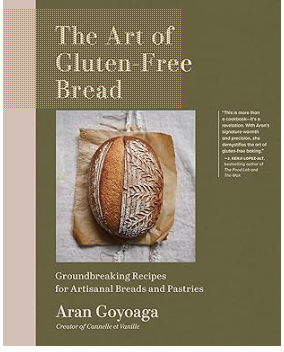
Before even opening The Art of Gluten-Free Bread, it helps to understand why gluten-free bread exists at all—and why it’s so notoriously difficult.
For some people, avoiding gluten is not a lifestyle choice but a medical necessity. Conditions like Celiac disease require strict elimination of gluten to prevent intestinal damage and long-term health issues. Others experience gluten intolerance or sensitivities that can cause fatigue, inflammation, or digestive discomfort. For bakers like Aran Goyoaga herself, the shift away from gluten often begins with health—and becomes a creative challenge.
But here’s the core problem: gluten is what gives traditional bread its elasticity, structure, and chew. Remove it, and you’re left trying to rebuild bread from scratch—often with unpredictable, dense, or crumbly results. That gap—between necessity and satisfaction—is exactly where this book positions itself.
What Goyoaga achieves in this book is ambitious: she doesn’t just offer gluten-free substitutes—she attempts to redefine what good bread can be without gluten.
From the outset, the book reads like both a manual and a manifesto. It opens with foundational techniques—flours, binders like psyllium husk, and fermentation—before moving into an expansive collection of over 100 recipes, from sourdough boules to brioche and even croissants.
This is not a “quick fixes” cookbook. Goyoaga treats gluten-free bread with the same rigor as traditional artisan baking. The inclusion of multiple sourdough starters and fermentation methods gives the book a sense of authority and depth.
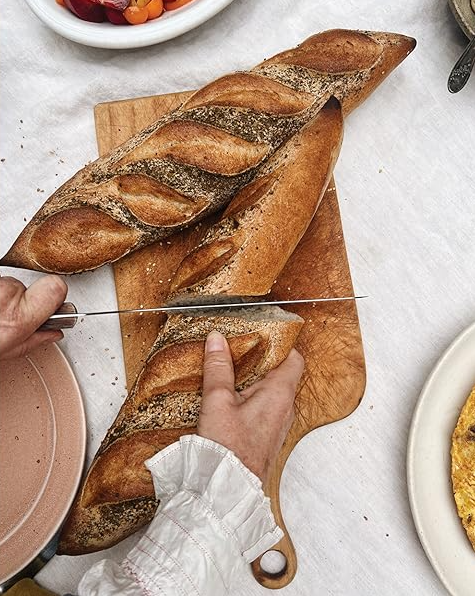
One of the book’s most compelling achievements is emotional as much as culinary: it restores foods that gluten-free eaters often miss—bagels, baguettes, challah, even panettone. There’s a quiet power in that—this isn’t about restriction, but restoration.
This book demands commitment. Specialised flours, sourdough starters, and careful technique can feel overwhelming, especially for beginners. Even experienced bakers will fin that results can vary and require tweaking.
This is an important truth: gluten-free bread is still less forgiving than traditional baking
Many recipes build on each other—starters lead to loaves, discard becomes pastries—which is rewarding but time-consuming. This is a book for people who want to immerse themselves, not just bake occasionally.
The reliance on niche ingredients (teff, sorghum, psyllium husk) may be a hurdle for casual cooks, both in cost and availability.
Where many gluten-free books settle for approximation, Goyoaga aims for transformation. The result is a collection that feels almost revolutionary in its intent: to prove that gluten-free bread can be as complex, beautiful, and satisfying as its wheat-based counterpart.
This is a demanding but rewarding book. It begins with necessity—health, restriction, adaptation—but ultimately becomes about possibility. If you’re willing to invest the time, it doesn’t just teach you how to bake without gluten—it changes how you think about bread altogether.
Workman Publishing /Hachette Book Group
Available on Amazon £27.50
ISBN-10 : 164829202X