
There are wine regions. And then there is Sicily. An island where volcanic soil, sea winds and generations of wine makers come together to make something quite spectacular.
You’d be forgiven for not knowing that Sicily, the island at the extreme south of Italy, has three times the size of New Zealand’s vineyard area. I didn’t know either. It also has more vineyard hectares than Veneto, Tuscany and Puglia. The extremely diverse terroir and climate, 100 days of harvest, biodiversity and more than 20 native grapes plus many ancient, rediscovered varieties, contribute crafting wines of extraordinary quality.
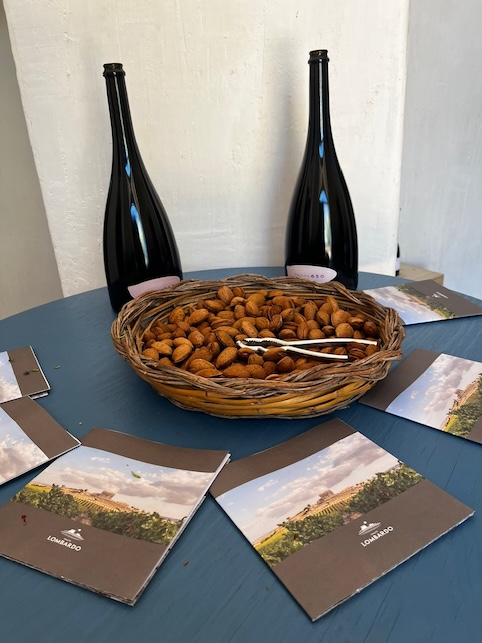
Let me introduce you to the unexpected world of Sicilian wine.
Sicily has been making wine for thousands of years, starting with the Phoenicians who first traded sweet wines across the Mediterranean. Today Sicily produces around 76 million bottles a year and exports to over 100 countries. With so many choices, it can be tricky to pick a quality bottle—a challenge shared by the 3.5 million tourists who visit each year.
Which is why the Sicilia DOC Consortium, formed in 2012, works tirelessly to bring together local winegrowers and bottlers to protect, promote and guarantee the high quality of Sicilian wines. DOC stands for Denomination of Controlled Origin.
When I met Alessio Planeta, current president of the Consortium and head of the leading Sicilian family winery Planeta, he shared with me: ‘We created the Sicilia DOC label to protect our heritage and guarantee top quality We unite local winemakers to share authentic Sicilian wines with the world – fresh, versatile, food-friendly and proudly from Italy’s top organic wine region’.
Grape Varieties That Speak The Language Of Sicily
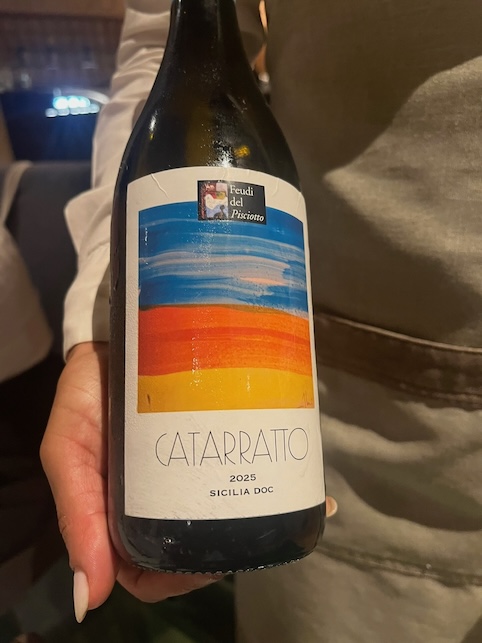
There are 14 native varieties recognised under the DOC Sicilia designation. Of these, you will probably recognise names such as Grillo, Catarratto and Nero D’Avola when you pick up a bottle of Sicilian wine from your local supermarket. And more than likely, this is also labelled Sicilia DOC – now you know what to look for on your next wine shopping trip.
During a whirlwind tour of several producers, from small family run wineries to large cooperatives, I tasted around 50 different Grillo, 40 Nero D’Avola, 24 Catarratto and many other varieties in between. Did you know? Grillo translates as ‘cricket’.
According to old Sicilian fairy tales, a cricket was believed to act as the horse that carried fairies on its back. Thus the cricket earned the poetic nickname of Cavallo delle Fate (the fairies’ horse). There is even a wine label called exactly that. A Grillo which really impressed me was Voce del Lago (the voice from the lake – oh, these Sicilians are so poetic!) from Masseria del Feudo. A family-owned winery, they pioneered organic grapes viticulture, ‘not for the marketing, stresses owner Francesco Cucculullu, ‘but for the health of the grapes’. They pick the grapes twice—first for freshness, then for sugar—blending them into an intense, fruity, and fresh wine. Their Hermosa label comes from high-altitude old Grillo vineyards, fermented long for complex flavours.
Grillo also makes outstanding, high-altitude sparkling wines—like winemaker Lombardo’s lemon and white peach-flavoured bottle—though they may take time to reach the UK. Lombardo’s high-altitude wines are deliciously fresh, while their climate-resilient Catarratto is praised as the age-worthy ‘wine of the future’.
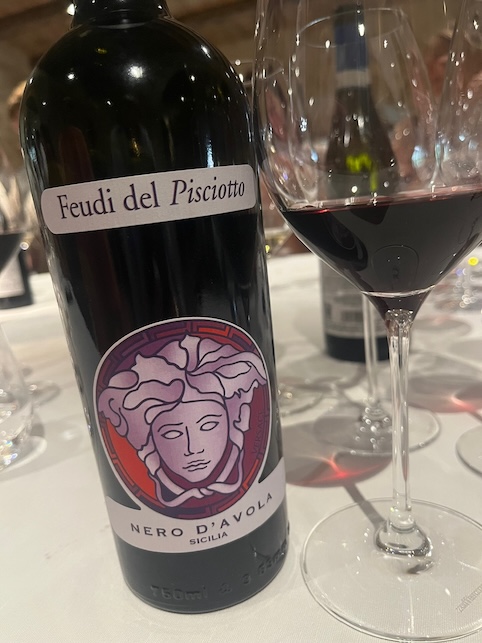
Nero d’Avola produces excellent champagne-method sparklers, delightful rosés, and famous reds. At Feudi del Pisciotto, a boutique winery, hotel and restaurant, winemaker Marco Parisi highlights the grape’s purity, elegance, and aging potential as the true expression of Sicily. Their bottle label—designed by Donatella Versace—honours the terroir and features a restored statue head celebrating Sicilian culture.
Casa Grazia is a charming winery which seems to exist in a world of its own. Like other wineries, it makes wines and olive oil, and it has a chapel on site. The story goes that when the owners were looking at the land where they wanted to plant their vineyard, they found a chapel, and it was the ‘sign’. They must have been right because the wines are incredibly beautiful. Their Grillo Sicilia DOC, the Zahara Grillo Riserva Sicilia DOC, the Frappato Rosato and the Nero D’ Avola Pemari are legendary.
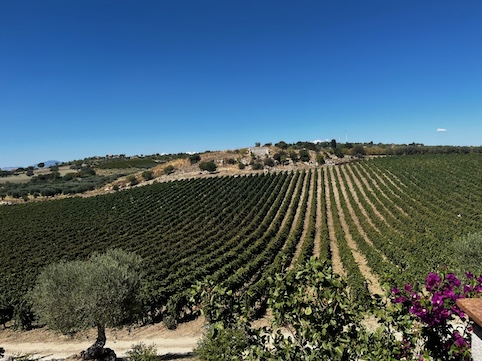
Look out for other grape varieties too, many are available here – I love Nerello Mascalese grown on the volcanic slopes of Mount Etna, the fragrant Frappato, the dry Carricante, the time-honoured Zibibbo and the elegant Perricone. Aside from Waitrose, Sainsbury’s and Tesco, all of which have a good selection, try Majestic www.majestic.co.uk and Bottle Apostle www. bottleapostle.com where I usually find my favourite Sicilia DOC.
Naturally, you should pair these wines with the one food which epitomises Sicily: Arancino, the deep filled rice ball, breaded and deep fried. But wait a minute, is it arancino or arancina? Whether you call it arancina (feminine for its resemblance to a small orange in Palermo and Trapani) or arancino (masculine for its resemblance to Mount Etna in Catania and Messina) simply depends on regional dialect. It will taste just as good.
Luisa Welch is a freelance writer and a member of the Circle of Wine Writers