
Foodepedia had a pleasure attending a tasting pisco evening hosted by ProChile at Mareida restaurant in Fitzrovia, which has most of its decor imported directly from Chile.
Both are fairly new to London, Mareida just turned one this May and Chilean pisco is expanding its London horizon. Some guests at our table are first timers to this clean grape based drink.
Many just know it as the main spirit in their pisco sour, which is often prepared with Peruvian pisco rather than one from Chile.
Pisco however is quickly gaining popularity, with sales growing across the globe, it’s no surprise, to me it’s been one of my favourite spirits for a while now but I do agree that it’s not always easy to come across it even in London bars.
I love it for its clean palate and easy to pair it with most ingredients thus making it into a great spirit for cocktails. But also drinking neat or over ice.
It’s no surprise it’s the most popular drink in Chile but usually in its aged form. Chile is the only country that’s allowed to age pisco, and they are quite the experts.
They have been mastering the craft since 16th century when it first started as a way to preserve wine and avoid spoilage in Atacama and Coquimbo, regions of Northern Chile.
As the demand grew the production became more structured, in 1931 Chile formally created a Denomination of Origin, making it the oldest DO in the Americas.
So what’s the difference between Chilean and Peruvian pisco? Well quite a few things actually.
Peruvian pisco is distilled once and bottled at distillation proof, without dilution or wood ageing. Production is limited to designated grape varieties and specific geographic regions.
Chilean pisco regulations allow greater flexibility in production, including blending, post-distillation adjustment of alcohol levels and in some cases, wood ageing.
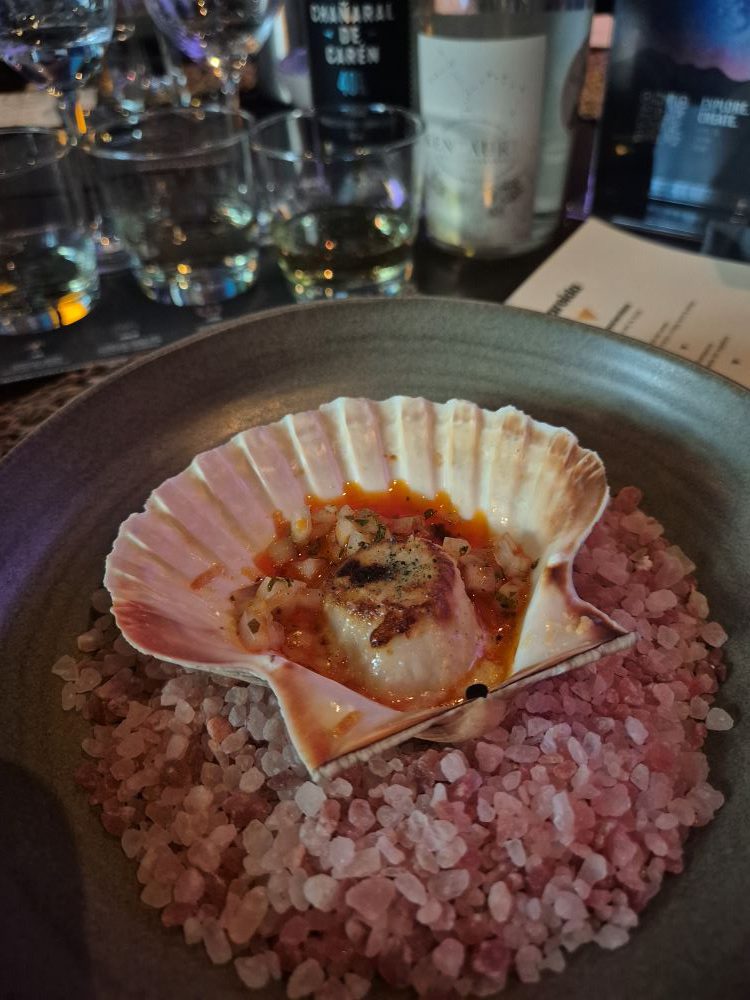
The category encompasses a broad range of styles and alcohol strengths. Making Chilean pisco highly versatile to at-home cocktail drinkers and behind the bar, in a simple highball, a citrus-led sour or more spirit-forward serves.
In its home country aged pisco is traditionally mixed with coca cola and widely enjoyed from student parties to more sophisticated events all depending on the variety and the brand of the spirit.
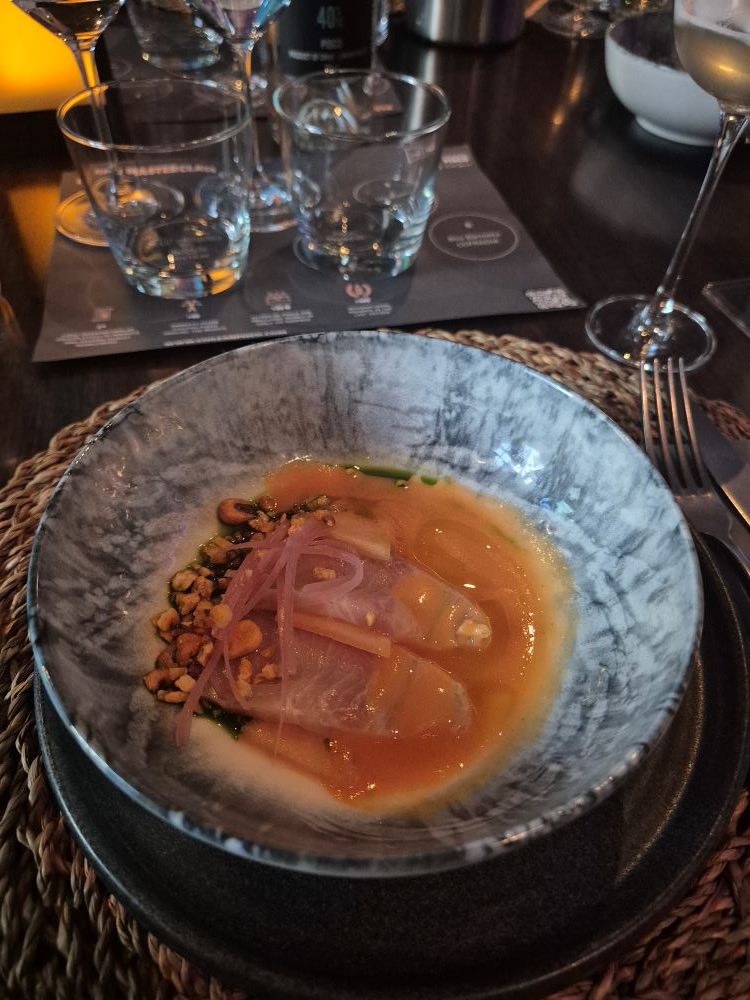
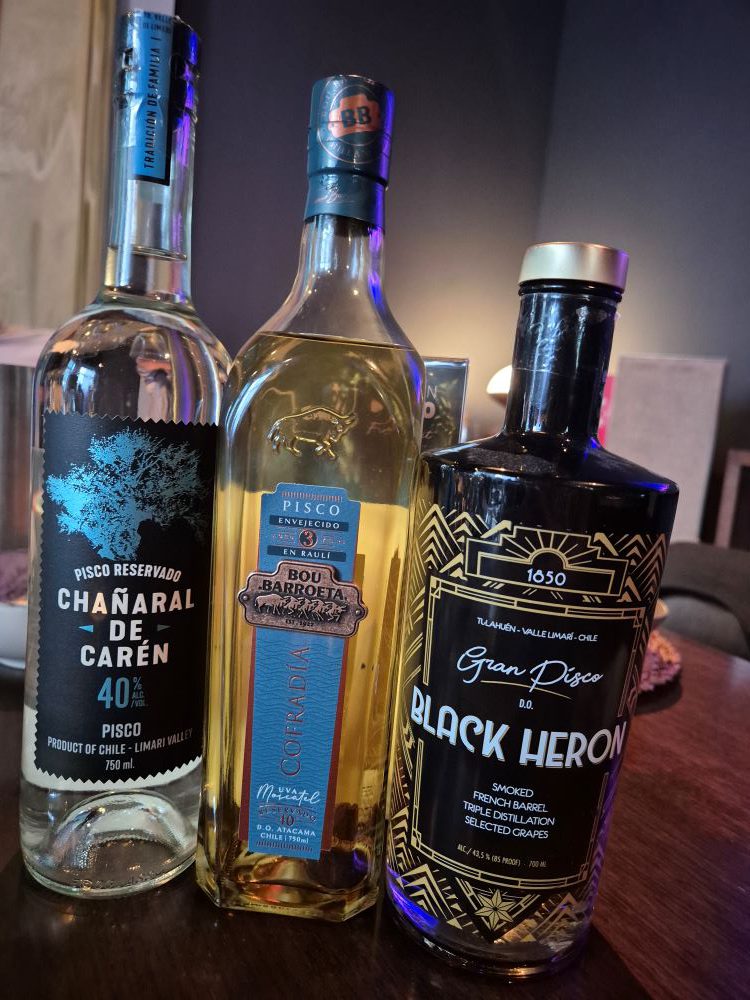
Our evening commences with a Chañaral de Carén 40° and hamachi. Its buttery slices with shiso, melon and crispy corn pair so well with this smooth and well-balanced pisco.
It has floral aromas with bright notes of fresh citrus and grapefruit yet a silky texture and a clean, lingering finish that highlights Muscat profile. It originates from mineral rich cool region of the Limari Valley.
Meanwhile the hamachi tiradito comes from a farm in Netherlands, one of the shortest carbon footprints for a yellowtail.
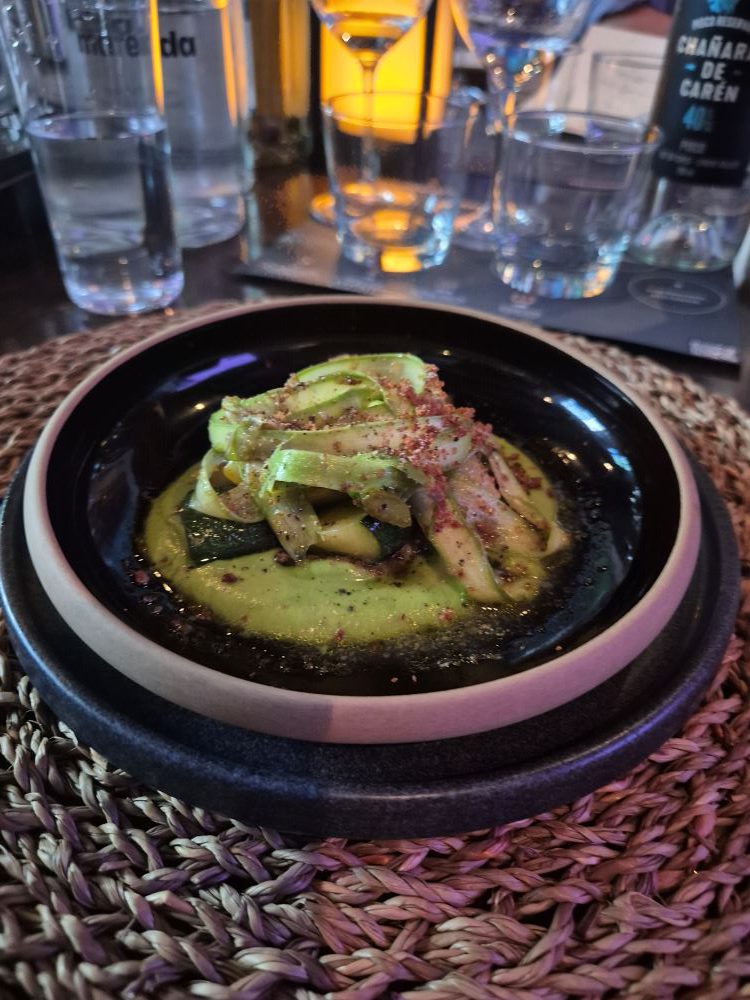
Next is a vegetarian dish, tagliatelle long fresh duo of dark green and Lebanese courgette a paler green cousin. They are carefully layered on a bed of herbal salsa.
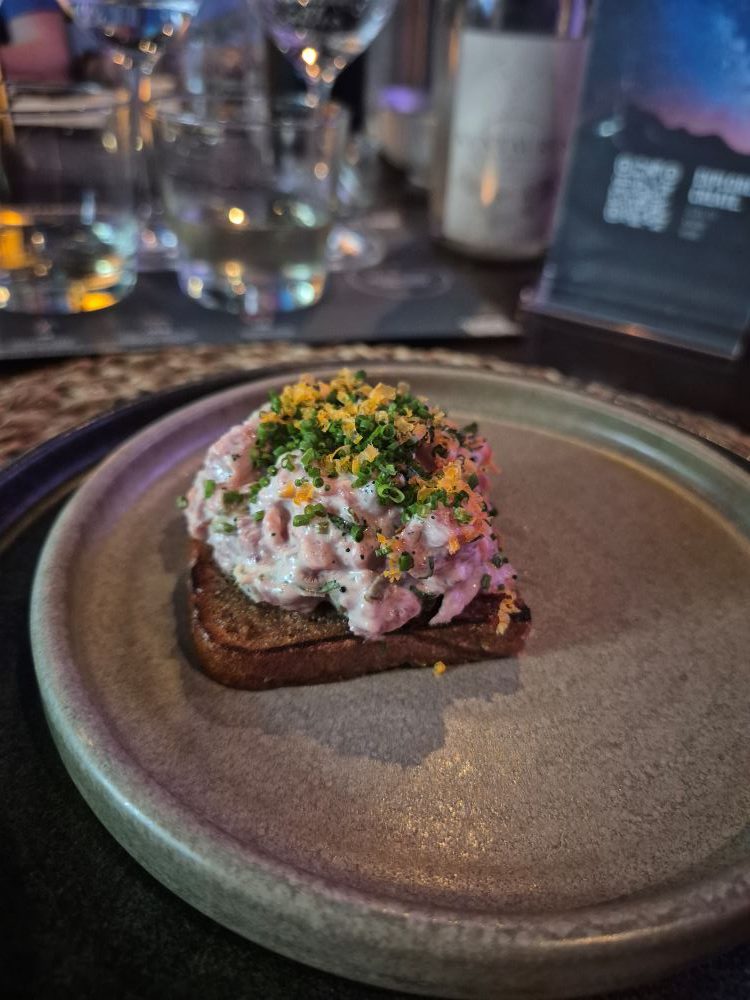
It’s a breath of fresh air especially in this heat, for the drink it’s Kentaurus Reservado 40°. And although a angled melted wax looks promising, it’s my least favourite.
I find it too alcohol strong and flat for the flavour layers. Meanwhile some guests highlight its mandarin and bitter orange notes, with a finishing touch of spice. It really proves the saying different strokes for different folks.
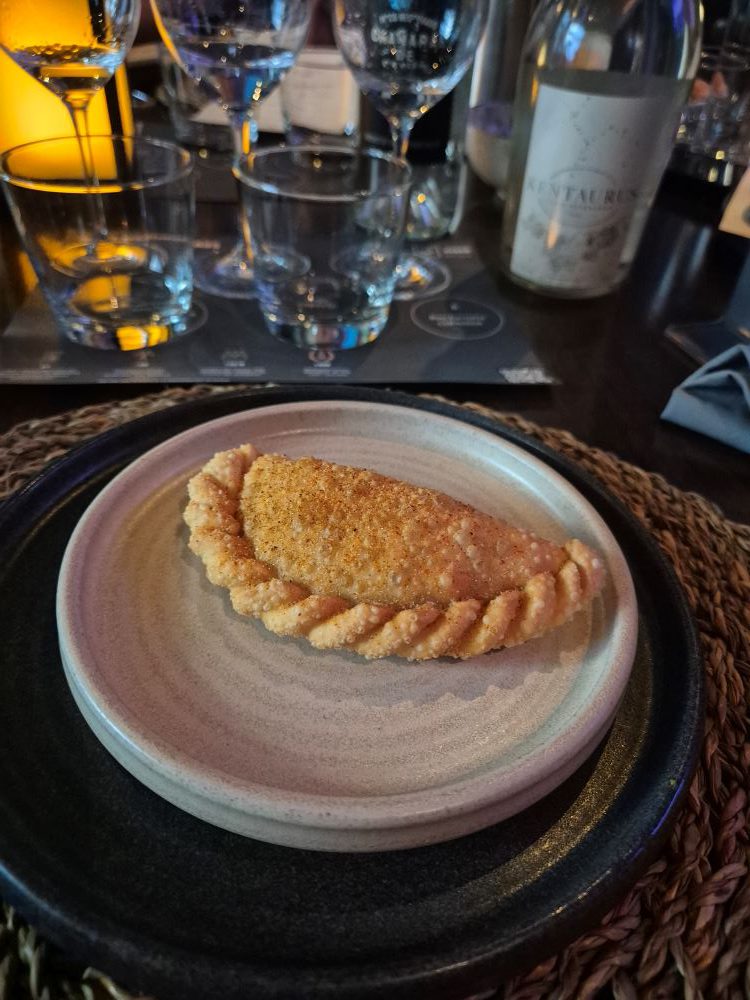
I enjoyed all the dishes here but if I had to highlight one, it would be a lobster empanada, a Latin American’s version of a Cornish pasty but depending on the region the filling can be pretty much anything.
Here the chef makes it with lobster and gruyere. Cheese and seafood can be a controversial pairing but not on this occasion, the cheese’s nutty, aged complexity proves an inspired match, adding savoury depth without masking the lobster’s inherent sweetness.
It goes well with Mitral Pisco, a favourite that evening. Mitral is aged in oak, developing inviting aromas of vanilla, toasted nuts and dried fruit over its distinctive grape character.
If you enjoy whisky, bourbon or even rum, you’ll sure love this. It has similar rich and velvety palate, balanced notes of caramel. But a lot smoother finish without that throat kick that other aged amber spirits tend to have.
For those who enjoy discovering new dishes and drinks, Mareida is the place to visit. Chilean cuisine remains surprisingly underexplored, despite its remarkable depth and diversity.
The restaurant also recently introduced a dedicated pisco bar, inviting guests to explore Chile’s national spirit either neat or through a curated selection of cocktails.
Mareida, 160 Great Portland St, London W1W 5QA
Mareida