
Spain and Portugal celebrate the diversity of their wines
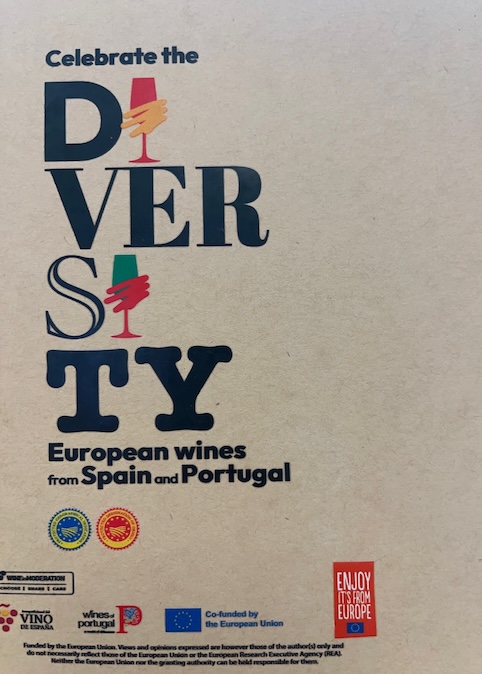
We’ll be hearing more about Spanish and Portuguese wines in the months to come, as the two countries have come together to jointly invite us to ‘Celebrate the Diversity’, a three-year initiative dedicated to discovering the richness, quality and heritage of European wines from Spain and Portugal.
We were invited to an event hosted by OIVE (Interprofessional Wine Organisation of Spain) and ViniPortugal, the two organisations which promote and support these wine sectors internationally.
Susana Garcia from Spain and Federico Falcão from Portugal could not have been more enthusiastic in presenting their wines and clinked several glasses with us whilst explaining what makes them so desirable. Their idea was not to present the boring technical stuff, but to taste the wines and see if we enjoyed what was poured in our glass.
‘We want you to take a walk through the Spanish and Portuguese vineyards and discover our wines with us’, said Susana introducing the tasting, which was friendly, fun but still full of fascinating information.
Did you know that, together, these two countries share 3,000 years of winemaking traditions? They also share rivers – so important to viticulture – like the Douro, Tagus and Guardiana, which originate in Spain and empty into the Atlantic Ocean and into the Gulf of Cádiz in Portugal.
They share grapes, like the Spanish Albariño and Verdejo, known as Alvarinho and Verdelho in Portugal, the Spanish Tempranillo known as Tinta Roriz in Portugal, and many other indigenous varieties now stepping out of obscurity and into the limelight. Together, they make 100’s of wines, the language is similar and they share the same joy of Mediterranean living.
Spain has the largest vineyard area in the world and is a leader in organic viticulture, with over a 100 officially recognised wine regions under various quality classifications. Portugal is smaller with 14, but with wines of equally high quality.
We were joined by Jonathan Kleeman, a certified sommelier and award-winning wine consultant with a deep passion for wine and hospitality. He brought the wines to life for us showing their richness, quality and heritage.
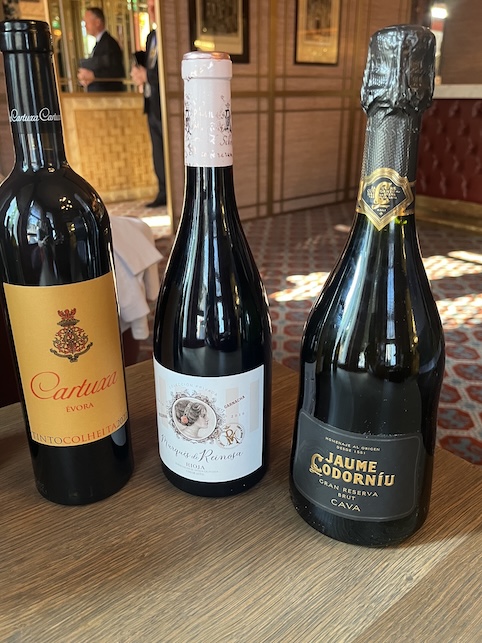
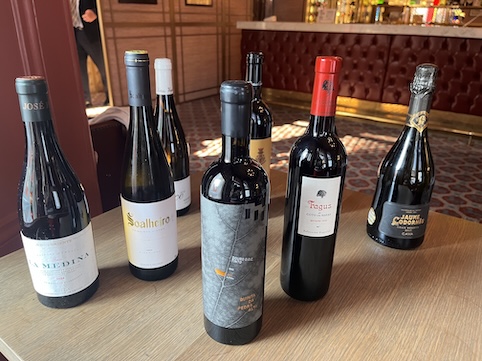
The delicious Cava Ars Collecta Jaume de Codorníu Brut Gran Reserva 2019 from Spain was the ideal way to kick off the tasting on a rather hot evening. Cool and delicious, these bubbles encapsulated all the quality that Cava, which is made by the traditional champagne method, has to offer.
It uses international grape varieties such as Chardonnay and Pinot Noir blended with the local Xare-lo. ‘This is a statement wine’, Jonathan said. ‘It has a place among the world’s most luxurious sparkling wines, and it would pair well with a pork dish as its acidity cuts through fat’. It got my seal of approval.
He followed with Soalheiro Primeiras Vinhas Alvarinho 2024 from the Vinho Verde region of Portugal, made with 100 percent Alvarinho grape from old vines. ‘Not a simple, spritzy vinho verde but a complex white wine built for serious gastronomy’ he continued. This too was delicious.
A classic Rioja, Marques de Reinosa Garnacha Old Vines Selection 2019 was a revelation, it was ‘terroir in a glass’, made from a native grape variety with global appeal. Meanwhile, the Cartuxa Colheita Red 2022 from Portugal’s Alentejo region was being poured. This is a region I know well, and I have always loved its wines. This one, made from the Alicante Bouschet, Trincadeira and Aragonez grape varieties, was described by Jonathan as the ‘quintessential Alentejo style, generous, incredibly smooth, packed with deep notes of dark plum, leather and warm earth’.
Along with other white wines from Spain’s Castylla y Leon region featuring the Verdejo grape and from Castilla-la-Mancha region where the rare Albillo grape is grown, Portugal presented a top red from the Douro, Quinta da Pedra Alta Reserva 2022.
We were hosted by Hispania at the Melia Hotel South Kensington, which provided the final touch with a selection of Spanish and Portuguese bites to complement such a glorious selection of wines. It was a feast for all the senses. We could only say Gracias-Obrigado, Buenas Noches-Boa Noite. And Cheers to Diversity again.
We already enjoy a good selection of Spanish and Portuguese wines here in the UK, but this will increase in the months to come, both on shelf and on wine lists, so look out for these hidden gems as they become more available.
#CelebratetheDiversityEU Insta: @celebratethediversity_eu
Luisa Welch is a freelance writer and a member of the Circle of Wine Writers